
Body Composition Test
Data can give you a deeper understanding of your body and what it’s made of. The test helps you take a step toward reaching your goal, whether it’s improving your health or boosting your performance.

See the distribution of muscle and fat mass
Improve Your Athletic Performance
Identify lifestyle-related health risks
Increase muscle mass
How is the test conducted?
We offer two different tests to measure body composition. The video shows bioimpedance analysis, which involves standing on a scale to get readings about your body.
What can a body composition test tell you?
A body composition test (anthropometric test) can provide you with valuable information and a comprehensive picture of your body composition, which can help you:
- Manage your weight by gaining or losing weight
- Assess your health and your body's potential for muscle growth
- Increase muscle mass
- Improve Your Athletic Performance
- Identify lifestyle-related health risks
About the Test
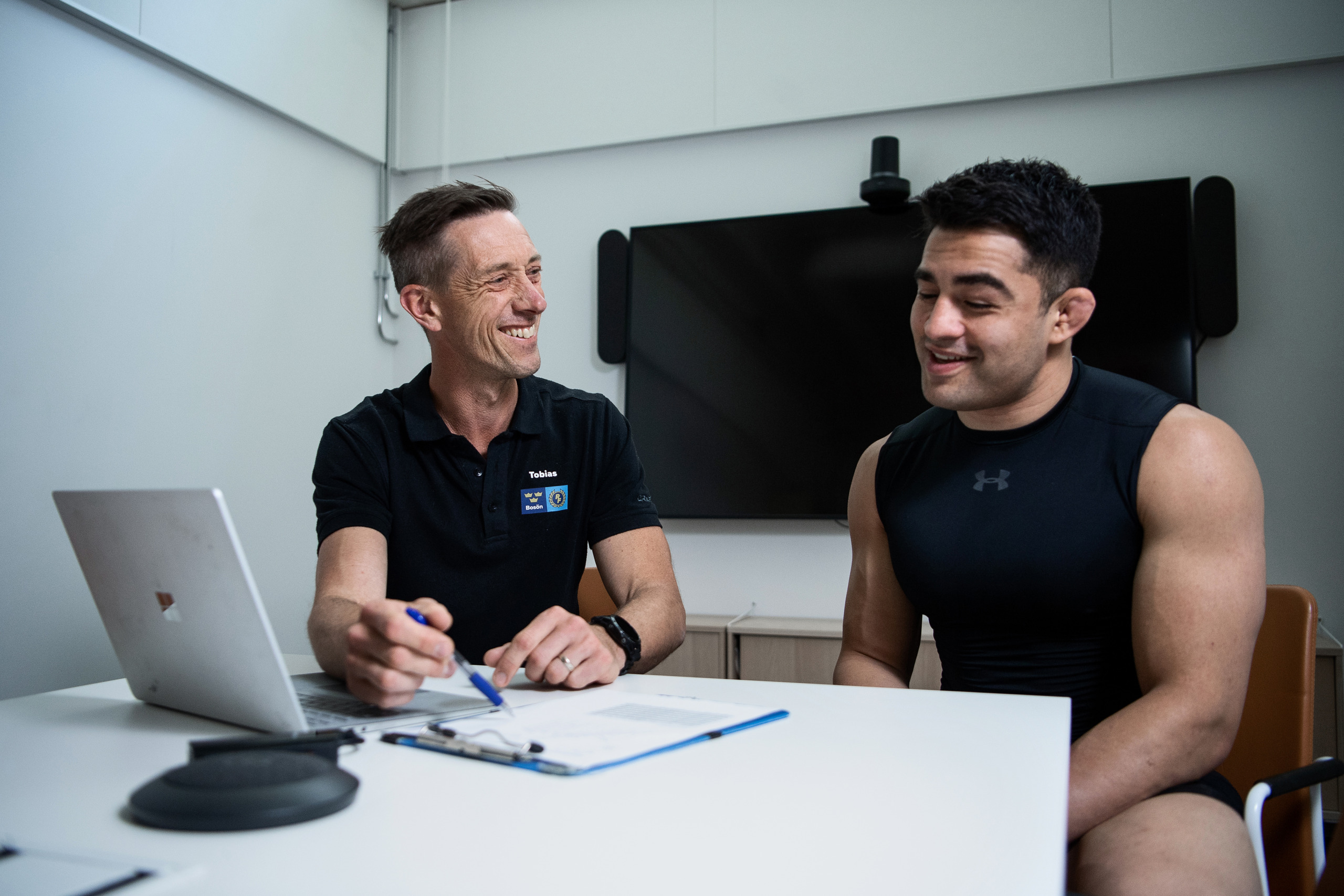
The test results serve as an excellent basis for creating personalized exercise programs and/or nutrition plans, as well as for evaluating progress by tracking changes in muscle mass and body fat over time.
There are several different methods for measuring body composition. These methods vary in:
- Simplicity: How easy the method is to implement.
- Accuracy: How precise the results are.
- Report Content: What type of data and analysis you will receive.
Methods
We offer two different methods for measuring body composition:
Bioimpedance Analysis (InBody 770)
Bioimpedance is an advanced and rapid method in which a weak electrical current is passed through the body to measure the resistance in different tissues. This makes it possible to analyze body composition in detail.
- Provides a comprehensive analysis of the body's muscle mass, fat mass, and fluid levels.
- The results include, among other things, the distribution of muscle mass in the torso, legs, and arms, visceral fat, and basal metabolic rate.
Skinfolds, circumferences, and skeletal measurements
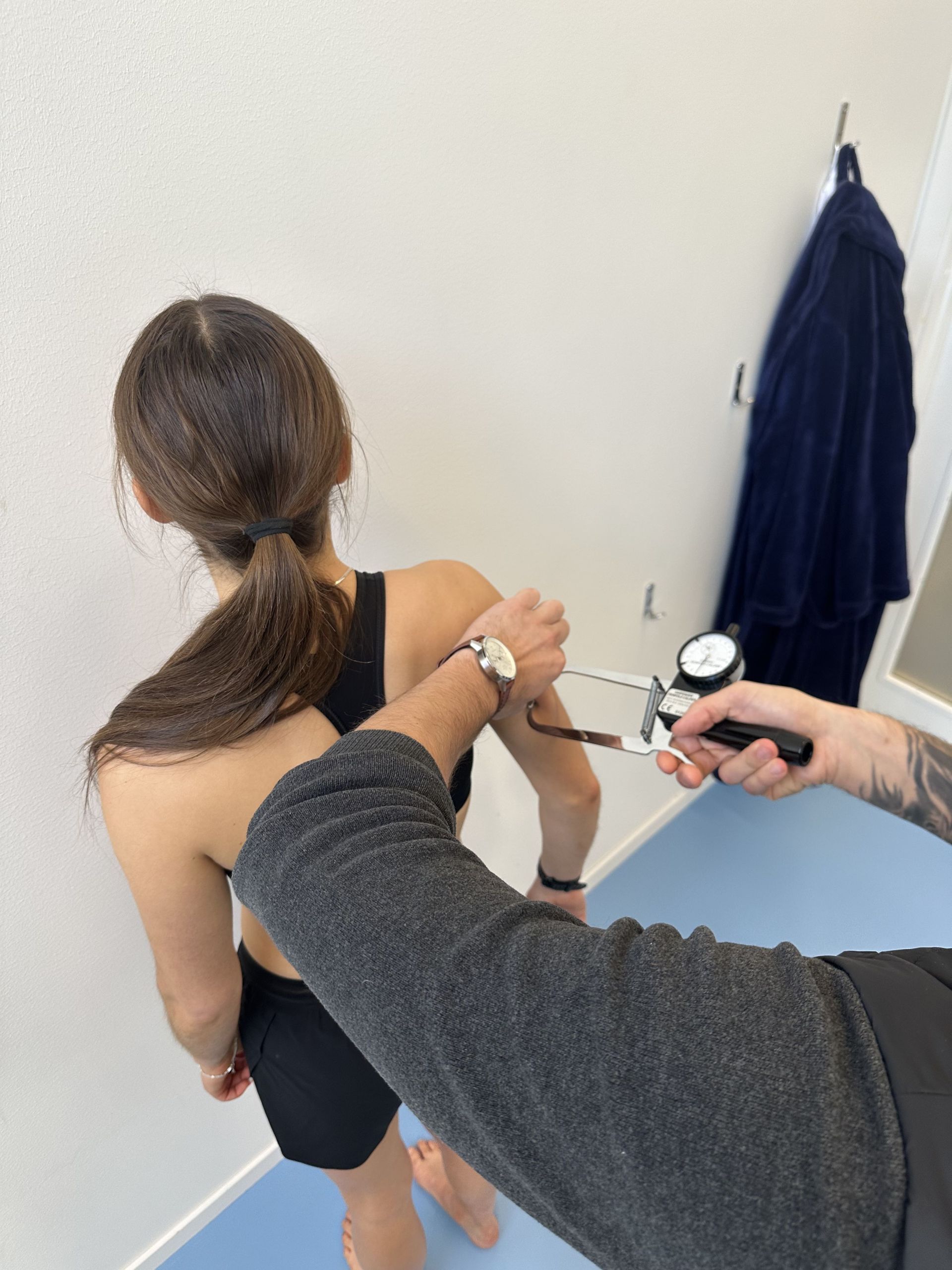
Skinfold measurements are performed by measuring the thickness of the skin and subcutaneous fat with calipers at specific points on the body. The results provide insight into the body’s distribution of fat-free mass and fat mass, which is important for assessing health and identifying an optimal balance between fat and muscle mass.
Useful for measuring subcutaneous fat and tracking long-term changes, especially during weight loss or muscle building. Circumference measurements of various body parts, such as the waist, hips, and arms. Together with skinfold measurements, these measurements provide information about the distribution of muscle and fat mass, which can be used to evaluate training results in greater depth. Measuring skeletal density provides insight into your body frame and can be used to estimate how much muscle mass your body can support in a healthy way. This can be important for athletes in weight classes.
After the test
After the measurement, you will receive a printout of the results. These can be used to:
- Create a personalized workout plan with the help of a fitness advisor.
- Develop a meal plan in consultation with a nutritionist or dietitian.
NOTE: If you want to view the results of your bioimpedance measurement on your phone, you'll need to download the InBody app from the App Store or Google Play and create an account.
Practical Information
The bioimpedance test takes about 30 minutes, including a review of the results.
The time required for skinfold measurements, circumference measurements, and skeletal measurements is approximately 45 minutes, including a review of the results.
Price for Bioimpedance: 750 kronor
Price of Skinfolds: 1,200 kronor
Important Information Before Your Visit
To ensure accurate results, we recommend the following:
- Refrain from using Training for at least 24 hours before the measurement.
- Fast for at least two hours before the test (applies only to bioimpedance measurements).
- Measurements are taken while wearing underwear, shorts, or a sports top.
NOTE: People with pacemakers should not undergo a bioimpedance measurement, as the method uses a weak electrical current that can interfere with the pacemaker’s function. This could compromise the safety of both the pacemaker and the individual, making the method unsuitable for these individuals.
Contact Us
Feel free to call or email us, and we'll be happy to help you with your questions!

08-699 66 47

fystester@boson.se